quotes

Showing posts with label Recovery. Show all posts

Sunday, January 5, 2014

Investors take an opportunistic approach as economy improves

The US economy is expected to strengthen this year, with consensus around 2.6 percent growth. Global business confidence continues to improve with manufacturing in the lead.  With both consumers and businesses more optimistic heading into the new year, the combined strength in shipments could lead to a rise in equipment investment which bodes well for a rebound in global business activity. Consumption growth also rose in November, with core retail sales reflecting better than expected holiday spending despite some concerns about budget priorities in the lower-income group. The general backdrop suggests that investors could continue to seek higher returns in riskier assets that are more economically sensitive as the focus returns to fundamentals.

Allocation still favors equities
Fund managers are increasing weightings in developed market equities: Europe, Japan, and the US being the most favorable markets. There is still the chance for a pull-back in equities this year. The S&P 500 started 2014 in the red, and Asian shares followed lower as the Nikkei moved below 16,000. This could reflect some positioning amid lower volume, but some analysts suggest that this could be another buying opportunity.


For now, there is still room to extend margin debt as traditional bond outflows continue. Historically, investors have been extraordinarily leveraged during market rallies such as the tech bubble in 2000. Times are different now as fundamentals improve and central banks continue to support a stimulative environment. The case is stronger in Europe where valuations are still relatively cheap and in Japan where more easing from the BoJ coupled with large pension funds shifting allocation to equities could prove attractive from a global perspective.

Economic slack remains
Despite the optimistic outlook for 2014, there are still some concerns in the real economy. The lower income group tends to be hit the hardest during budget issues which leads to political dithering. Wage growth has improved, but labor productivity has risen by only 0.3 percent on year, but the rise to 3 percent during the third quarter of 2013 was impressive given the solid GDP report and non-farm payrolls during the same period. Andrew Smithers of Smithers & Co states that bad news on productivity could lead to signs of realism that will continue to make the case for a low rate environment. If the market outlook is premature, higher inflationary expectations without the true fundamental backdrop could be a problem.


An opportunistic approach
After a period of lower interest rates and soft demand for loans, US large cap banks could benefit from an improving economy especially as the yield curve steepens. Profit margins expand as banks borrow at lower short-term rates and lend at higher long-term interest rates. The rebound in housing and auto demand suggests that consumers are more comfortable with taking out loans as the economy improves.

Industrial strength is leading demand for non-residential construction where wages are higher and supply is limited. This will be an important year which will test the true strength of the economy. We are still in a stimulative environment, and even as the Fed reduces its pace of asset purchases, rates could find some comfort around 3.5 percent on the 10-year this year. Financing conditions are still favorable for many sectors which could support expansion. For example, US airlines are posting stronger gains as nominal GDP is upwardly biased, but we will need to see capacity expand as demand picks up to confirm further strength into the next year.

Tuesday, November 12, 2013

Challenges for Australia as China reforms point to slower growth

Despite recent signs of modest economic improvement, Australia is likely to remain on a tightrope for quite some time as the country’s mining boom slows down. Recent economic data from China shows strong improvement, but that could change as leaders are set to implement significant reform measures that could slow growth in the near-term. The market is well aware of the challenges ahead for Australia, and several important risk factors suggest that the Australian dollar is likely to remain subdued, especially as it struggles to sustain a rebound off summer lows.
China’s Third Plenum matters
A four-day, closed door meeting between China’s leaders to discuss the economic and political agenda for the next decade just concluded and expectations are high for significant reform. China must pave the way towards a market economy that will redirect credit away from inefficient state-owned-enterprises (SOEs) to much more efficient private enterprises. The new agenda should loosen the state’s control over capital allocation, which starts with reducing the limits on wealth transfers.

Wednesday, October 23, 2013

Asia Focus: AUDUSD up on Australian CPI but pares gains in Asia

Australia's housing sector helped boost Q3 figures. Photo: Shutterstock
Australia’s third-quarter CPI report was impressive despite remaining subdued on the headline print at 2.2 percent on year from 2.4 percent in Q2, which is still at the lower range of the Reserve Bank of Australia’s target of two to three percent for annual inflation.
The market was expecting slower CPI in Q3, but the trimmed mean figure beat consensus at 2.3 percent on year. The Reserve Bank of Australia (RBA) places more weight on trimmed mean CPI, so the recent rise could sustain the RBA’s more favourable tone on the economy.
Furthermore, the Q3 Aussie CPI report showed a greater contribution from the housing group, which suggests that recent data are starting to reflect the low rate environment. The RBA is now watching the higher AUD. 
Also, top China banks tripled debt-write offs as investors fear default. The seven day repo rate rose 42 basis points in Asia which; lingering fears on banking -- China's weak-spot, was behind the sudden AUDJPY drop during the Asia session. Key China PMI data ahead on Thursday to watch for as well. 
Continue reading at Saxo Bank's TradingFloor.com

Friday, October 11, 2013

Australian economy modestly improved but still fragile

The Reserve Bank of Australia (RBA) softened its dovish view on the economy after the summer when headlines of a possible soft landing in China and declining terms of trade shifted the focus onto the vulnerable Aussie dollar. AUDUSD sustained a nice rise after recent China data came out ahead of market expectations, but domestic data did not suggest that Australia was out of the woods.
That could be changing now as recent confidence and employment data point to a modest improvement, which could keep the RBA satisfied for the remainder of the year at least.

Saturday, July 13, 2013

Economic Update - Rise in yields puts economy to the test

As the Fed struggles to clearly communicate its plan for tapering, or lack thereof, rising yields continue to linger as the US economy is put to the test. Forecasts for economic growth in the latter part of this year remain, but with the possibility of drifting monetary support, the market is increasingly nervous about the true state of the economy. A good headline figure, but a weak underlying trend is the usual case now, but many remain positive on the housing recovery. Regional expansion continues to show some bright spots thanks to the Shale Boom, but rising rates are making a significant impact on the local level. Finally, with little progress on the fiscal front, all eyes are on the Fed for its next major move.


Divided Fed

Tim Duy's latest "Fed Watch" post argues that the Fed is deeply divided and that Bernanke is essentially pulling the strings. Half are for and half are against tapering, but Bernanke had to be the deciding force to lay out the plan for eventual tapering as the cost of continuing QE are too high. In doing so, the 7% unemployment target and inflation pickup to 2% (economists predict somewhere around 1.4% by Q3 2013) should also be met. We assume that the FOMC is on board with this, but Bullard stated that these thresholds were not voted or approved by the board, so it's just a reasonable outlook to help guide future policy decisions. This makes the overall message confusing to those wanting a definite answer, but there are many factors to consider before a decision is made to taper.

Inflation data looks promising with producer prices at 2.5% y/y for June, and CPI inflation rate at 1.4% in May (June figure posted on 7/16/2013). Consumer inflation expectations are at 3.3% over the next 12 months, up from the June projection of 3% according to the U.Michigan Consumer Sentiment Survey. However, the growth side faces some hurdles after the IMF issued a lower outlook on global growth that could hit home.

US growth expectations are at a 2.3% pace for Q3, to 2.6% for Q4. With China and Europe posting slower growth, will the US rise above or coincide with global pressure? UPS lowered its forward looking guidance and expects a slowdown in the US industrial economy. Nevertheless, economists are still positive on the second half of 2013, but a lot still rests on the Fed.

The market needs greater clarity, and if the message is not clear, then perhaps the board is a bit uncertain about timing. The scare factor will remain present in the market as investors price in the fact that tapering will eventually occur. The recent USD sell-off after Bernanke's "dovish comments" - which was just a jolt back to reality - is another sign of over-reaction. Better data are supporting yields, but the real question is whether or not the economy is ready perform on its own feet. The first real test will be how well the housing market performs as rates rise.

Higher rates sparking fear in housing?


As the 30yr fixed mortgage rate climbed to 4.51% this week - currently at a two year high - the total number of mortgage applications fell 23% from the prior week, according to data from the Mortgage Banker's Association. The refinance index slipped 4% as higher rates are becoming less appealing, but are still historically low! This is still a lax environment that will keep the housing market afloat. We could see activity picking up to lock in these historically low rates.


Refinance applications still represent about 64% of existing mortgages, with about 35% coming from the HAMP program. Generally, foreclosures are way below 2009 peak levels, and there is a noticeable lag between judicial and non-judicial states - factoring in the process of going through state courts to finalize a foreclosure. The extra steps involved in foreclosures could spur auction activity. Remember that cash buyers are out there and investors are fueling the housing recovery. People who have accumulated wealth and saved up during the down times, are returning on the backs of an improving economy. On the basic level, the picture is still not structurally sound. Employment figures are still stuck near that 3 month average, and first time homeowners are lagging in the lost generation facing increasing debt; resulting from the student loan crisis which will create a greater economic strain down the line. The market is ripe for the come-back household and market investors. Housing activity is directly tied to the local level where states are slowly entering recovery mode.

Rate impact on the local level

The 10yr yield continued to rise near 2 year highs when yields topped near 2.74% in 2011. Improving economic data and the bond sell-off on fears of Fed tapering contributed to the recent 10yr performance. Yields have since declined off the 2.70% level to around 2.60% after Bernanke's dovish comments. It's interesting to see the impact of rising yields on the local level.

General Conditions --

States are working to close budget gaps and many have improving outlooks. Problems still remain with pension obligations and other liability short-falls, but the regional recovery is starting to shape the US economy. Many opportunities that can easily get lost in the macro fray are occurring locally, and the trend is moving inward. The Shale Boom pushed North Dakota out of 38th place in real GDP terms in 2011 to #1 in growth from 2011-2012, with 10.84% in per capita real GDP according to the US Bureau of Economic Analysis. However, a Pew Stateline article stated that other states are not faring too well. Alaska's production is significantly lower, and Wyoming's tax revenue is down almost 17% from its pre-recession peak. With supply exiting Cushing to refineries on the Gulf coast, many are starting to question whether expanding railroad infrastructure instead of pipeline growth will keep up with the Shale Boom. Generally, we are seeing more public/private partnerships in transportation and infrastructure funding, and overall visible supply in the muni market is still low for the summer.

Capturing Yield --

With economic opportunity present, and some problems still needing a fix, investors are keeping a close eye on yields. Much of the focus is on protection; Morgan Stanley's Municipal Bond Monthly report put it best: "yield pickup on the longer end remains relatively flat...are investors adequately compensated for additional interest rate risk?" We could expect investors to either limit duration in muni portfolios or demand greater yield on the long end.


Thursday, April 11, 2013

Economic Update - Are we in transition mode?

There is still an air of economic uncertainty in the US, but there is hope. Hope that this year will mark the start of a recovery. The struggle to reach that point places an emphasis on the string of economic indicators and the reality behind them. We know that the Fed is keeping a close watch and is considering its options should the economy show signs of strength later this year.

March FOMC Minutes

The latest minutes were released early to several high ranking officials and the joke goes that if they can't get an email right, what makes us so sure that they can get the timing of a QE exit correct. Nevertheless, the minutes for March were released to the public during the morning hours EST instead of the usual afternoon time. It showed the evident discourse among FOMC members about when the phase out of the controversial and much extended QE program (reaching a record $3.22 trillion) will occur. We get a feeling that the consensus is for later this year when some economists expect a pick-up in the US economy.

Even still, members said that if labor market conditions improved as anticipated, it would probably be appropriate to slow purchases later in the year and eventually stop by year-end. There is still the possibility of returning to QE-lite because uncertainty still lingers, and the Fed might feel the need for continued support.

The debate over when to put a nail in the QE coffin is nothing new. The past few minutes have brought to light the concerning nature about balance sheet risk and the economy's ability to continue growth without the artificial push. The first mention of this was back in Q4 of 2012 which sparked an immediate stock market sell-off. Now, investors are aware of the ageing QE program, to the point where recent attention shifted to negative news from Cyprus which then caused a plunge in treasury yields.

The Breakdown

We can't ignore the healthy rise in equities. Some wonder if it is inspired by QE or just last minute bids on a general fear of missing out on some good gains. The fact is that QE has shifted asset allocation away from the usual safe-havens and stimulated a risk-on investment environment. But we have to take a step back and remember the fundamentals behind the recent low from early this year in which equities used as support for a rally. Stock market gains are not matching earnings and economic data, which suggests that a mix of sentiment and the quest for yield is the driving force. The stock market was bogged down with debt ceiling and fiscal cliff bickering at the start of 2013 which created a good buying opportunity. Technicals looked right and investors took advantage of the dip.

A deeper look into the economic fundamentals display some evidence of a transition to recovery. We see wealth gains mainly in the form of equities and a pick-up in housing construction and building activity. Consumers are still deleveraging which allows for spending. For example, refinancing could mean that savings are free to be allocated to more productive areas such as home improvement. A deeper look into the data gives us an understanding of how consumers are economizing during the economic transition.

Consumer debt has dropped to more comfortable levels, and credit can pick-up to reflect some confidence in the consumer's ability to borrow. However, the employment picture looks bleak. With a significant decline in labor force participation and a stagnant low-wage environment, there is little evidence to support a healthy labor market. Most of the activity is coming from the capital side of the growth equation. The fact is that most are under-employed and we are seeing households stick together - income sharing to phase out the negative in anticipation of a return to normalcy in which every member of the household is fully employed and self sufficient. Until we get there, a lot of the data might reflect only a half-truth.

We also have a demographic battle in which economic activity is missing the matriculation of first time buyers and the fresh labor pool of earners and spenders. The stark reality is that student debt is holding back the younger population resulting in higher defaults and the lack of entry level opportunity that is commensurate to the cost of study. Close attention to the Northeast housing and consumer market will be an important indicator to track this, as a great share of college graduates populate that region.

China marches back, but the West still looks ill

Good China trade and industrial data caught investors by surprise. There is a renewed sense of optimism in emerging markets overall. But some concerns over China's local debt problems and demographics keep the longer term outlook on a tightrope. The hope is that the new government will be quick to address these issues.

We will need full strength of the West for a clear sign of a global pick-up. Europe still looks weak with new sprouts of headline cases like Cyprus still in the mix.

The uncertainty is still there - look at the peso's fall against the greenback on Thursday as a signal that there is some concern about the ability of the US to boost the global economy. The Americas need the demand from the US, and LatAm markets can be an important indicator for foreseeable strength in terms of trade.

Long term view relies on current policy action

At some point, we will see sustained growth. Whether it starts later this year or rolls into 2014, there is evidence of transition and signs of hope. But the real question is how will we be able to keep the economic engine going.

Take a close look at the coming budget negotiations. Approach the issue with a clear mind and hear out both sides. Compromise on a long awaited budget will pave the way. We desperately need a framework to guide us through a recovery, or else we will get more of the same out of control spending and borrowing. There is doubt that whatever deal is reached, it will not be enough to address the serious fiscal deficit issue and economic folly that is inherently structural.

Immigration should be an important focus to keep the US as the most reasonable place to innovate. Innovation is part of the global market, and we must remain competitive. Higher education is taken up by more foreign students who will be at the helm of the growth. Look at Canada's latest plan for guidance.

Lastly, there is belief in the states. Despite underfunded pensions and liability short-falls, states have been busy strengthening their fiscal position. Most states are in a good cash position and the supply of municipal debt has declined. Investors are starting to see less risk, and the latest Census data shows an increase in state tax revenues. The revenue plans are highly strategic and take advantage of areas of productivity such as drilling out West. Some regions of the US are doing far better than most, and perhaps there's a good  model out there for solid growth.


Thursday, December 20, 2012

Facing Austerity. Head-on.

Assuming this isn't outdated by the Mayan calendar, 2013 will be the year of austerity. It's already here, but its impact will be more apparent in the coming year as it dampens the extent of a full recovery as governments continue on with an unbalanced check book. This process is inevitable and in some cases necessary to break out of an economic slump with some sort of fiscal sanity. The problem is not just in the US where this coined term of  a 'fiscal cliff' is actually what has been planned; its just the extent and distribution of the scale-back that's up for debate. As expected, the developed world is set for a stalled recovery with room for only modest improvement that will still lie below full  potential, especially given the new Fed thresholds on employment and inflation. Emerging countries will continue to face some struggles, but they will be busy stimulating during this time.

Some form of the fiscal cliff is inevitable. The fiscal framework of our nation is designed with limits to be  amended as we go to ensure that we are somewhat responsible to continue running the country on a balanced footing. This is why Congress has the power of the purse, but constant partisanship never gets us to that ideal point of leadership. In this case, we see extreme political strategy that surprisingly hasn't seen the kind of backlash that Europe has. The fact of the matter is that each proposal includes spending cuts that target many entitlements that we have grown accustom to but are clearly unsustainable. Our complex tax code deprives us of key revenue while the spending outlook will continue to dig us deeper into deficit. Whatever is agreed upon will still decrease our potential to accelerate economic growth.

We must address the political strategy, because this will determine whether or not we will ever get it right. The White House has cleverly used this 'balance' myth by shying away from real reform and spending cuts. If you really dig into the budget, many of those line items are highly sensitive because so many people rely on entitlements especially during these times. No one is willing to take bold action, and would rather gradually scale down the effects of costly programs that truly have a demographic mishap such as social security and medicare. When Republicans pressure spending cuts and reform, the White House has blamed lack of revenue as the reason for imbalance and then automatically factor in tax hikes and cuts on the middle class to show the 'only' way to balance the books. This type of thinking is a far step-back from reality.

Governments Ready?

Elsewhere in the developed world, governments have realized the problem and are cutting their forecasts. Canada, which relies on a US comeback in order to fully push on with full potential, has pushed its expectations back by one year to around 2015 when the country should return to surplus. The country also decreased its revenue projections over five years, and will essentially rely on decreased government spending in order to balance the books. In the UK, the Autumn Statement called for a decrease in welfare entitlement spending which caused quite a stir among its dependents. The ECB decreased its growth forecasts for the eurozone, and Germany is set to feel a pinch with declining industrial production. Lastly, Australia's Finance Minister Swan admitted during an unscheduled press conference on Thursday that the country is unlikely to achieve a budget surplus this year, breaking the major platform in the Labor Party's election pledge. Meanwhile, Australia's Prime Minister Gillard is on vacation; once again shying away from addressing fundamental issues.

Greece is a special case. Yes, we all know this. But it has essentially become the hallmark of austerity, and could set precedent on how its done (whether the country is proceeding in the right or wrong direction is a separate discussion). The fact is that Prime Minister Samaras is quick to work on structural reforms and grow the economy as part of the strict terms of its long awaited aid tranche of short term rescue loans. Closing in on its  sixth year of recession and +20% unemployment, Greece's real problem is demographic. Greek youth are fleeing the country, choosing school over work, or are busy protesting austerity in the streets of Athens. The country is one of the worst in the world for setting up a businesses given the impending legal costs, and the businesses that do come to fruition are short lived. Most of the people are employed by the government; and working for a broke employer disrupts the dependent system to begin with. Austerity at its finest. Or maybe just pure socialism.

Central Banks Prepared?

Central banks are ahead of the game, but it still won't provide a full cover-up of the underlying fiscal set-back. The Fed removed its 2015 guidance and agreed on additional asset purchases which suggests that the US economy is still under performing. The RBA cut rates and hinted at a mining peak which should help prepare for some fiscal tightening down the road for Australia to eventually reach a budget surplus.

The bottom line is that fiscal tightening is ahead, and this will force us to struggle along the recovery stage, performing below our full potential. Banks may have access to easy capital thanks to the easing mechanisms of central banks, but that money will remain stashed on the balance sheet until the political storm passes. Businesses will not invest unless there is some certainty on corporate taxes and the consumer's ability to be productive. We will all be a bit shaken with a change in the status-quo.

Check out: Rising stars of the fiscal cliff - Maya MacGuineas of Fix the Debt

Wednesday, November 7, 2012

The US must seize the economic opportunity

 
This past election was about who will be in charge of the nation's long road to recovery from the 2008 downfall. In the month leading up to election day, the US reported encouraging figures which at first glance seemed to indicate that we are on a path to a sustained recovery. The disappearance of housing inventory and a low rate environment inspired some support for a sector that was at the heart of the recession. Unemployment continued its decline to 7.9%, but still the overall trend remains weak with a lot of Americans simply settling for lower wages to make ends meet. Let's not forget about the long term unemployed facing declining skill levels and personal discouragement. It's clear that a recovery is in sight, but many challenges are ahead that will disrupt the progression.

Despite the debatable policies of the last four years and failed attempts to try to get the economy going (ie QE and fiscal stimulus), the private sector surely has struggled, but it carried along to continue doing business. Individuals and businesses don't rely on government wholeheartedly to keep moving; it is in our nature to keep the economy going. Surely, the pace at which we do this can be fine tuned by government forces. We know that businesses have high amounts of cash, but are cautious to invest and hire because of the high level of uncertainty. The private sector needs proof of a sustained recovery in order to take that risk to naturally stimulate a return through growth. So far, the government has discounted many of these potential decisions, and the political dithering is causing the economy to under perform.

Two examples that support this claim are seen in the recent earnings season and our domestic energy sector. Earnings came out relatively good at face value, but the slew of negative profit outlooks is very troubling. The fact of the matter is that consumers are spending because the cost of living is higher. This does not necessarily mean the price of goods are higher; lower wages decreases our purchasing power and uncertainty about what's to come forces us to spend rather than save. This fuels revenue growth in key sectors such as consumer cyclical. Companies that deal with trade and logistics such as UPS and FedEx have expressed some concern about future demand despite having the capabilities to continue running smoothly.

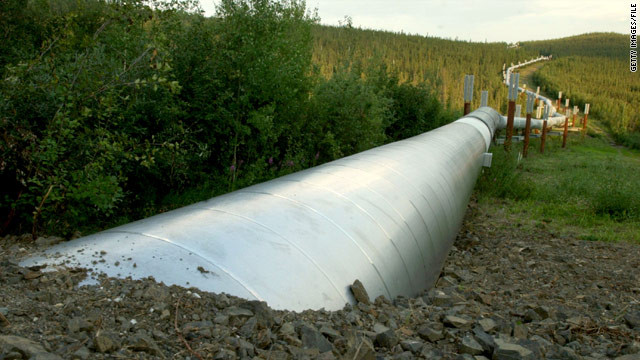
In energy, we have a clear distribution problem that cuts directly into the business of drilling. Despite the opening of some federal lands during the last four years, the pipeline network to actually fuel demand is severely lacking and the decision to block Keystone until after the election only adds to the problem. Drillers know the economics don't work just by having access to a glut of supply; a concrete energy plan is needed and will get us on a solid track to recovery. This could truly be America's new innovation moment, but again it has been discounted. A lame duck session is unlikely to get this rolling.

Furthermore, the market has responded to the electorate decision, and it clearly supports my stance. Despite an immediate rise in equity futures following the election results, equities came to terms and reversed direction to the downside. Treasuries saw a significant rise as yields declined. Gold and silver soared with gains at 1.91% and 2.76% respectfully. This indicates a level of risk-aversion due to both the near term uncertainty and the longer term assurance of monetary easing.

The fiscal cliff poses a large threat to the economy, and House Speaker Boehner said it best - we have to build a house on rock instead of a house on sand. No doubt there will be some bickering, but this is our chance (once again) to reverse years of economic folly that is already deeply rooted in the US. The spending limit is a mandate that has been abused year after year to continue along an unsustainable path. Recoveries come and go, but we need to make sure that we have a country that has its books in order to limit the downfall. Boehner is calling for a new growth/reform model that is open to greater revenue, but it will require lots of work. That's what these next four years should be about. We must continue the fight outside of the ballot box and vote with our dollars. Trust in ourselves to make it through, and be prepared for any outcome. Four years should not be the end all. Make it a legacy.


Thursday, November 10, 2011

Keystone Pipeline Delayed Until After Election Year

The Obama Administration delayed approval for the Keystone XL pipeline extension from Canada to the US Gulf Coast. Yet another move to play it safe and place political strategy ahead of real economic due diligence. The administration decided to play it safe and dismiss any decisions on moving forward until 2013, one year beyond the 2012 presidential elections.

The current Keystone pipeline starts in Hardisty Canada and extends down the US mid-west belt to St.Louis. The proposed Keystone XL pipeline project will push westward, passing through the borders of Nebraska's Ogallala aquifer to reach the southern tip of Houston Texas and Port Arthur Louisiana. The estimated $7 billion project has been in talks for decades, and the US government was supposed to follow a schedule of 12-18 months of logistic, economic, and environmental studies.

Instead, the delay will decrease optimism among US shippers and refiners, Canadian oil sands producers, and job hunters from both sides of the border. Gulf Coast refineries need certainty about their supplies; delaying their scheduled deliveries one year out (along with the time needed to build), is enough reason to forget the idea of getting oil sand crude altogether.

Aside from the fact that the US clearly does not have an energy plan, it's also puzzling as to why the government allocates so much time for review and political strategy, but does nothing in preparation for new projects. It would be logical for the US to beef up safety precautions such as engineering barriers and enhanced filtration to make way for a project that is sure to develop some ROI for the neighboring states. Issuing a municipal bond to bring the infrastructure project into fruition, while paying back those bondholders with revenue generated by industry productivity is a solution that makes sense. We need a collaborative approach to work around constraints to maximize capital, labor, and productivity resulting from the pipeline project. Canada deals with the production, the neighboring states deal with optimizing economic gain from the pathway, and Houston and Port Arthur deals with the inflow of oil sand crude and delivery to the nation.

Another year of bickering does nothing when no one is willing to get serious. Canada must be laughing in a field of oil sands right about now. We can't blame them.

Tuesday, November 1, 2011

America Needs More Engineers

The quality of America's labor supply is low. Most politicians don't understand education reform. It's the backbone of the economy, and doesn't do much if it is given conventional treatment. We need a complete overhaul as to how we get people equipped for the labor market. The constant rhetoric of increasing graduation rates and improving test scores is just more pussyfooting. We need to re-instill the passion for math and science to produce the next generation of engineers from all disciplines: financial, environmental, mechanical, software, medical and more.

The proof is in the Beveridge Curve to the bottom right. Even as we extend emergency unemployment compensation, job vacancies continue to increase. As the plots move further away from the regression line, more jobs are left unfilled. This could mean that with unemployment benefits, the recipients don't utilize the time to acquire more skills.


Since I was a child, I've always questioned why people drift away from science and math. Up until fourth grade, children have great curiosity in the sciences. We all wanted to know how things were created - it was like explained magic. I remember at age seven I told my parents I wanted to be an astronaut. My Mom, always realistic, would tell me that that plan involved lots of work and heavy academics, but I replied that my back-up plan was to be an astronomer. Little did I know that that too involved the same level of math and science, coupled with hard work and determination. As I grew older, my elementary school had us play with LEGO blocks and introduced shapes and basic geometry with some math. I then wanted to build things. I came home and replicated cities with my building blocks - I wanted to become an architect. By fourth grade, something happened and all of my friends put aside their scientific dreams and wanted to be rock stars and athletes. This was where trouble began.

Some may argue that every child can be what they want, and there is nothing wrong with being a rock star and athlete. However, there is a lot wrong with this. The spillover effects on the economy are somewhat toxic. Glamorized careers produce little advancement to the economy as a whole. These rock stars do not contribute to the prime industries that utilize the nation's resources to effectively compete in the global economy. They often establish charities with little understanding of economics, causing more harm than good. The odds of being the next rock star and athlete are so low that the probability begs children to protect their human capital at all costs. Being an educated rock-star with some skills to fall back on is fine. An engineer who has a side band is also great.

Sadly, the damage has already been done. More Americans are entering the workforce with little skill and 9-10% unemployment rates are worrisome (not including the underemployed and those who stopped searching for jobs). Interestingly, Americans with just a High School education are evenly distributed among professions. This means that the less educated are still starting businesses and becoming productive managers. As support, these low skilled entrepreneurs need the expertise of skilled workers to expand. As lending declines, more entrepreneurs are relying on savings and personal credit to start ventures. The savings need to come from somewhere - a job. That job that can provide sufficient start-up income is hard to come by if you lack the necessary skills that are in high demand.

According to Manpower, 46% of senior human-resources executives surveyed in the company’s latest global annual survey said that their talent gap was making it harder for their firm to implement its business strategy. Only 27% said they felt their business had the talent it needed. And the shortage is likely to get a lot worse because of the imminent retirement of a generation of seasoned workers with sought-after skills in the rich economies. In 2008, one in four workers in America with a degree in science, technology, engineering or mathematics was 50 or over. Lockheed Martin, an aerospace firm, expects nearly half its science and engineering workforce to retire by 2019 and will have to hire a total of 142,000 engineers. Currently only 60,000 engineers a year graduate from American universities. -The Economist
There is intense pressure on the younger population to replace the old. Jobs require more skills and experience. Young graduates might obtain the skills but lack experience. Older workers have the experience, but lack skills. The solution is to work on getting the young population experienced while receiving a skillful education. At the same time, we must get the older workers into skilled programs, certainly before they give up and seek early retirement placing a strain on the near bankrupt benefit schemes of the nation. We need to act fast.

The problem is not just American, and we can actually learn from other nations. Russia faces an exodus of skilled people who have the income to venture away from the nation. This creates a problem as President Putin plans to rely less on energy exports and more so on human capital and innovations in technology and banking. Germany has comparative advantage in manufacturing, but its youth are shying away from math, science, and technical skills. Also, women are intimidated by the stigma of technical work being a man's job. The Arab World is probably the most interesting example of a plan that could have worked. Governments in the Middle East did well at educating the youth by creating great institutions and pushing its large population of young people through school. The problem was when most of them graduated, jobs were nowhere to be found. The management of most companies are run by a group of foreign educated elite and to some extent controlled by the State leaving managerial powers at the hands of the autocratic ministers. Little room is left for the recent grads to utilize their skills. Great opportunity for America.

We need a plan to leverage the shared problems of the world. It starts with labor. US companies should continue to recruit the skilled graduates from foreign lands, and the government should relax its immigration policies in certain respects. An Indian student who graduates from a US school looking to work in the US should be welcomed because it contributes to our economy; strengthening our comparative advantage against the home country of that student. We are placed one step ahead. Currently, it is very expensive to go through the immigration process with Visa issues and such, so US companies give up and wait for the few skilled US grads to apply.

While they wait, we should help them craft the incoming applicants to their liking. Organizations such as the National Math & Science Initiative (NMSI) are doing a great job at addressing this issue. NMSI sponsors advanced quantitative curriculum in schools across the nation. Exxon Mobil recently helped to spread the word with a series of commercials. This again is an opportunity for companies like Exxon to continue.

New York City has an adopt-a-school program that works wonders. Although it has been gradually dismissed throughout the years, some High Schools that are career focused create partnerships with companies such as Citigroup and grant internships to students. Students have a resume with skills already taught by the curriculum of their High School and sponsor company before entering college! Companies should team up with schools from as early as Middle School to guide a matriculation of well skilled applicants. It's cheaper than implementing a training program.

Research in Motion has a great collaboration with the nearby University of Waterloo in recruiting highly skilled graduates in the fields of engineering and management. The national  physics center and think tank founded by the company's two CEOs strengthens the relationship with Canada and its future generation. That is truly a great example of how corporations can best utilize regional human capital.

Bottom line is that we need to produce more engineers of various disciplines to effectively compete.

Sunday, September 11, 2011

What's Ahead for US Foreign Policy

Immediately following the horrific events on September 11th, the US acted on impulse and embarked on what now marks a decade of war on terror. The pre-9/11 mentality was full of optimism (despite the burst of the internet bubble) mainly in part of government's meddling in the housing and credit markets. The silently orchestrated debt crisis was inevitable despite the talk of pundits correlating the war with current economic slowdown. The terror attacks made conditions worse as it gave government more reason to prevent immediate recession. The decision to destroy the enemy was clear, but the motivation was filled with too much emotion and not enough reason.

Even as a child coming home from school to see the aftermath of the World Trade Center collapse on television, and knowing that my mother worked a few miles north still within the vicinity of lower Manhattan was too much to bear. The drive that I took with my Dad from the Bronx to a bridge way to wait for Mom was the worst ride of my life. The radio was filled with words of war, and I was convinced that everything I appreciated about my city was under attack by evil. I wanted to get even. That mindset of an 11 year old boy  was shared by many on that day, but forgotten at the time of battle. The purpose of war is to protect the crucial assets that make up a strong nation (land, people, resources, etc). Emotion propels action, but the basis of the fight should never be forgotten at home. 

As the war on terror progressed, we forgot to maintain what we were fighting to protect. The World Trade Center towering over the financial capitol of the world, was a beacon of capitalism, only to be destroyed. Since then, the motive of war has gone off point and the US is slowly having less to show for our world might. The logic discussed here makes further sense as troops fighting overseas would want to return home to a stronger economy, seeing first hand the result of hard work. Instead, often times the dream turned reality is subsidized with failed promises. Veterans are faced with an unsustainable pool of funds for rehabilitation services and other structural issues. 

Congress allocated $1.3 trillion (adjusted for inflation) towards the war on terror. The Afghanistan invasion costed us about $450 billion, and the Iraq invasion $800 billion. The cost of the externalities of war stand at an estimated $900 billion which is mainly veteran services (not including the ripple effect of other related spending).

According to Washington Post's Top Secret America Investigation, the defense industry expanded to about 2,000 private contractors mainly for IT & Support and military personnel. The alarming observation here is that security and defense contractors have moved away from production to services, responsible for the overwhelming bureaucracy of 1,300 facilities and 850,000 security clearance officials. Many of these agencies have sub-agencies, with a web of other agencies under the same umbrella often performing the same task. With a defense industry of massive scale, the US government created yet another critical asset in need of protection at all costs. 

The bottom line is that our assets are under attack and must be strengthened while protected. The threats are not just physical. China should be of main concern given the astronomical amount of attempts by Chinese hackers to tap into US government intelligence and private industry to mimic or destroy us in our tracks. The Middle East is an obvious threat, yet we still depend on the region for a large share of energy supplies instead of ramping up our own production at home and fighting to protect our resources like Russia is doing. With a defense budget of $650 billion between now and 2020 (small scale compared to the US), Russia is investing heavily in defense while it makes record discoveries of natural resources and maintains its regional power through distribution of natural gas deemed critical by smaller neighbors and the not so mighty Euro-zone. 

So much potential to get it right. Let's not wait any longer.

Tuesday, March 30, 2010

The United States Debt Cycle - How a Government Under Pressure becomes Suicidal


The global credit crisis is not over. In fact, the effects of government response are slowly coming to light. 2010 started with the European Sovereign Debt crisis which created a smokescreen for the US Dollar. Despite short term positivity that stemmed from stimulus spending, the long term outlook for this country will match Europe's current mess, if not worse. This issue is so unique because even the brightest Economist are still puzzled about how to solve it. There is no right fix for what we created, and the most complex models provide little help. The world is at a gridlock, and leaders are afraid to admit this. Behind the glamorous smiles of politicians lurks the fear of failure. The fear of a glut of problems that will escape as the economy becomes exhausted. Think about it; why did EU officials wait so long to respond? Why did they result to the obvious financial rescue packaged for troubled member countries? No one knows what to do. The question of how to fix debt burden countries will define these next few years. Rich countries under fiscal pressure will result to a band aid fix which will prove to be suicidal by 2012.

The band aid process started during the 2008 recession. The US government implemented a trillion dollar rescue package which included a stimulus package and Wall Street bail outs. The band aid was meant to please the public and mask the true problem of a growing credit crisis. Instead, we focused our attention toward domestic entitlement issues which seemed like the right thing to do during campaign season. When a major crisis hits, all promises should be set aside to tackle the serious problems that require gradual planning.

We are not used to this psychology. Risky companies who borrow during these times will eventually fall into a deep hole of debt and request more. But will the government always be there to forgive? Some say it's up to the economy. This is correct, but if you use this logic then it must be up to the government who has control over the economy. The biggest debtor in the game is the US government. When they fail, we all fail. Just like the credit marketplace -- filled with many players speculating and borrowing with Collatoralized Loan Obligations (CLO). Sound familiar? We are in the midst of another scheme that is so grand, it raises an intense concern of disaster.

Citigroup has entered the market with new CLOs. They are providing risky loans in anticipation of a recovery that will provide a satisfying return on investment. But, you can not ensure a recovery with a government making the same mistakes.

Credit that resulted from both government and corporate borrowing through bonds and loans respectively are due for repayment by 2012. At this point, if the economy does not pick up, companies will require more capital and if they do not receive it, there will be a rise of default and bankruptcies. The government will need to implement another trillion dollar rescue package and thus forcing the economy into a double dip recession. This W shape cycle will continue so long as leaders remain puzzled.

The investors who realize this will profit. It's all about timing; you must enter at the right moment during the peak of the W shape cycle. When that V is apparent during 2010-11 and many are quick to call it a recovery, prepare for that dip. The best strategy is for government to step back from forgiveness, but become more stern about credit.

Friday, February 26, 2010

The Export Driven Recovery

The race to positive GDP is in full swing. While the Euro zone gets all of the negative attention, and the US shines in response, the recoveries elsewhere are casted into the shadows. In the FOREX marketplace, no country is left unnoticed, so I decided to zero-in on three export driven commodity based currencies: New Zealand, Australia and Canada. These countries have a strong portfolio of natural resources that are in high demand, and make up a significant portion of GDP. This causes high volatility in their currency performance because they move according to commodity prices. However, the global recession provided a much needed boost for these countries.

New Zealand
Always used as a great case study, New Zealand had its ups and downs as their Central Bank scrambled to tame a growing economy. Following in Australia's footsteps, New Zealand issued a major stimulus plan that was focused mainly on investments with an eye on return. Because their economy is not as exposed to the global financial markets, the effects of the recession was not as severe compared to the US and Europe. New Zealanders suffered high unemployment as businesses faced pressure from lack of confidence and funding from banks. The stimulus provided an extra boost and sent housing prices back to comfortable levels. The Central Bank raised rates to tighten the recovery, and its currency rallied in response.
Despite the current positive news, New Zealand faces a tough year ahead. They must find a way to pick up the missed pieces of their second major recession in almost 50 years. The massive stimulus may have been too much, and government debt is projected to increase to nearly 35% of GDP by 2015. This could call for spending cuts and higher taxes; both may accompany higher interest rates and other monetary stimulus withdrawals.
The full response to handling stimulus pull back will be gradual, but the New Zealand government is taking some major steps forward. Once again, returning to exports, New Zealand recently began talks with India to end trade barriers. India will be a major player in the global marketplace as their economy shifts from agriculture to manufacturing. Demand for natural resources will be high, and New Zealand has found a specific trading partner.

Australia
Similar to New Zealand, Australia was not as exposed to this financial crisis. However, the banking industry is big enough cause economic suffering. A stimulus was implemented, and the nation quickly rebounded. Australia was one of the first countries to come back with an interest rate hike. New monetary tightening measures are always coming out of their Central Bank, and investors have scrambled to profit from the recovery down under. Again, the government must pay attention to debt and cost cutting measures.
Exports have long been Australia's strong focus. One of the major players in the Asia-Pacific Economic Cooperation (APEC), Australia has responded to China's increasing demand of natural resources. The country boosted exports in coal, iron ore and steal to benefit from China's industrial boom. They realized that China and other emerging powers will dominate the global landscape as rich countries stumble. Prime Minister Rudd made strengthening ties with China his main agenda during his election. He speaks Mandarin, and is often seen shaking hands with Chinese trading partners. Exploration, development, and exporting is at the heart of the Australian economy. The country must diversify their scope of investments and try to even out their focus on domestic demand.

Canada
Canada is a major exporter of Natural Gas and investments in offshore drilling and mainland exploration up north ensures confidence in their export driven economy. The country's proximity to the US hurt its economy after the effects of our recession spread north. However, using natural resources as a hedge came in handy. Canada is involved with more projects extending northward into the untaped arctic regions, neighboring Alaska, and new pipeline deals linking the far west to the US mainland.
The country isn't just built on oil and gas, but the diversity of their economy is well evident after the stimulus concentrated investments in various sectors. The recovery is slow but better compared to their major counterparts like the US and Europe. Industries such as real estate have experienced a strong reversal. Home prices have nearly risen 0.5%, and there are even talks of another housing bubble.
Last year, the Central Bank stated that Canada's recovery will be shaped like a hockey stick. A V shaped recovery is likely, but should be handled with caution. Expect some interest rate hikes (perhaps this year), and a booming housing sector. The Vancouver Winter Olympics provides a boost to the western economy.
Employment is still a problem, but the deficit is slowing down.
-------
Commodity currencies should be short term investments. Ride the volatility wave while the Central Banks release their stimulus withdraw plans. Short when commodity prices decline, or if the US and Europe rebound. Over the long term, the fundamentals explained in this article ensures positivity for New Zealand, Australia and Canada.

Saturday, January 30, 2010

Inside the US Dollar Reversal

As we all know, 2009 was a terrible year for the US Dollar. However, a strong but gradual reversal is well underway. This is mainly fueled by the Fed's announcement of extending currency swaps until February 2010. This means that the Fed is borrowing foreign currencies for US Dollars. This loan is then used for many of the Fed's strategies for strengthening the dollar during tough times. We know that the Fed is increasing liquidity with low interest rates, pumping capital into large banks to encourage lending, and supplying some foreign currencies to investment institutions who would otherwise invest elsewhere in the exchange market and further devalue the dollar. Also, the Fed can intervene in the Forex market to artificially create a reversal to fuel a rally.
This could also mean that the long period of decline has sparked foreign interest in the US Dollar. A weak dollar is not only good for trade, but also for investing. Foreign investors view a weak dollar as a bargain, and will invest for greater gains in the long run.
There are also some reasons for the dollar's short term intra day rally. The biggest reason is because of weak global economic conditions. The US Dollar's counterparts such as the Euro and Pound have experienced major declines these past few weeks. Investors are bearish on the Euro because of worries about Greece's painful deficit and potential credit defaults. The UK is a major economy that has yet to exit the recession or produce better economic data (although some newswires are quick to claim the UK is in positive territory). Also, we must factor in the UK elections; when coupled, this creates a tricky situation for the Pound.
With all of these reasons, the US Dollar has become the hot spot. The rally will continue as long as global conditions worsen. Investors should heed well to what the Fed says. Currency swaps will end in February and the Fed funding spree will become exhausted. Again, the hope is that the federal government has fueled growth. But, the real question is whether or not the markets are ready to sustain positivity on their own. So far, increasing unemployment is the major lagging indicator for the US. We have the potential to comeback, but the domestic economy must be fixed. The markets seem to be ready, but we're waiting on the politicians to act.

**charts provided by the ICE US Dollar Index**