quotes

Showing posts with label Politics. Show all posts

Tuesday, November 12, 2013

Challenges for Australia as China reforms point to slower growth

Despite recent signs of modest economic improvement, Australia is likely to remain on a tightrope for quite some time as the country’s mining boom slows down. Recent economic data from China shows strong improvement, but that could change as leaders are set to implement significant reform measures that could slow growth in the near-term. The market is well aware of the challenges ahead for Australia, and several important risk factors suggest that the Australian dollar is likely to remain subdued, especially as it struggles to sustain a rebound off summer lows.
China’s Third Plenum matters
A four-day, closed door meeting between China’s leaders to discuss the economic and political agenda for the next decade just concluded and expectations are high for significant reform. China must pave the way towards a market economy that will redirect credit away from inefficient state-owned-enterprises (SOEs) to much more efficient private enterprises. The new agenda should loosen the state’s control over capital allocation, which starts with reducing the limits on wealth transfers.

Thursday, September 19, 2013

Bernanke brings us back to reality as US remains on a tightrope

The Federal Reserve decided to maintain its pace of asset purchases, and the typical kneejerk reaction followed, but the important take-away is that many in the financial media were too optimistic. A lot of the noise leading up to the September Federal Open Market Committee (FOMC) meeting was largely a result of impatience and political speculation, with little regard to the independent structure of the Federal Reserve and its dedication to supporting the economy rather than paving the way for future successors or allowing the market to dictate monetary policy.
Federal Reserve Chairman Ben Bernanke’s press conference allowed everyone a chance to pause, reflect, and return to our trading desks with a more disciplined approach to interpreting information.

Thursday, December 20, 2012

Facing Austerity. Head-on.

Assuming this isn't outdated by the Mayan calendar, 2013 will be the year of austerity. It's already here, but its impact will be more apparent in the coming year as it dampens the extent of a full recovery as governments continue on with an unbalanced check book. This process is inevitable and in some cases necessary to break out of an economic slump with some sort of fiscal sanity. The problem is not just in the US where this coined term of  a 'fiscal cliff' is actually what has been planned; its just the extent and distribution of the scale-back that's up for debate. As expected, the developed world is set for a stalled recovery with room for only modest improvement that will still lie below full  potential, especially given the new Fed thresholds on employment and inflation. Emerging countries will continue to face some struggles, but they will be busy stimulating during this time.

Some form of the fiscal cliff is inevitable. The fiscal framework of our nation is designed with limits to be  amended as we go to ensure that we are somewhat responsible to continue running the country on a balanced footing. This is why Congress has the power of the purse, but constant partisanship never gets us to that ideal point of leadership. In this case, we see extreme political strategy that surprisingly hasn't seen the kind of backlash that Europe has. The fact of the matter is that each proposal includes spending cuts that target many entitlements that we have grown accustom to but are clearly unsustainable. Our complex tax code deprives us of key revenue while the spending outlook will continue to dig us deeper into deficit. Whatever is agreed upon will still decrease our potential to accelerate economic growth.

We must address the political strategy, because this will determine whether or not we will ever get it right. The White House has cleverly used this 'balance' myth by shying away from real reform and spending cuts. If you really dig into the budget, many of those line items are highly sensitive because so many people rely on entitlements especially during these times. No one is willing to take bold action, and would rather gradually scale down the effects of costly programs that truly have a demographic mishap such as social security and medicare. When Republicans pressure spending cuts and reform, the White House has blamed lack of revenue as the reason for imbalance and then automatically factor in tax hikes and cuts on the middle class to show the 'only' way to balance the books. This type of thinking is a far step-back from reality.

Governments Ready?

Elsewhere in the developed world, governments have realized the problem and are cutting their forecasts. Canada, which relies on a US comeback in order to fully push on with full potential, has pushed its expectations back by one year to around 2015 when the country should return to surplus. The country also decreased its revenue projections over five years, and will essentially rely on decreased government spending in order to balance the books. In the UK, the Autumn Statement called for a decrease in welfare entitlement spending which caused quite a stir among its dependents. The ECB decreased its growth forecasts for the eurozone, and Germany is set to feel a pinch with declining industrial production. Lastly, Australia's Finance Minister Swan admitted during an unscheduled press conference on Thursday that the country is unlikely to achieve a budget surplus this year, breaking the major platform in the Labor Party's election pledge. Meanwhile, Australia's Prime Minister Gillard is on vacation; once again shying away from addressing fundamental issues.

Greece is a special case. Yes, we all know this. But it has essentially become the hallmark of austerity, and could set precedent on how its done (whether the country is proceeding in the right or wrong direction is a separate discussion). The fact is that Prime Minister Samaras is quick to work on structural reforms and grow the economy as part of the strict terms of its long awaited aid tranche of short term rescue loans. Closing in on its  sixth year of recession and +20% unemployment, Greece's real problem is demographic. Greek youth are fleeing the country, choosing school over work, or are busy protesting austerity in the streets of Athens. The country is one of the worst in the world for setting up a businesses given the impending legal costs, and the businesses that do come to fruition are short lived. Most of the people are employed by the government; and working for a broke employer disrupts the dependent system to begin with. Austerity at its finest. Or maybe just pure socialism.

Central Banks Prepared?

Central banks are ahead of the game, but it still won't provide a full cover-up of the underlying fiscal set-back. The Fed removed its 2015 guidance and agreed on additional asset purchases which suggests that the US economy is still under performing. The RBA cut rates and hinted at a mining peak which should help prepare for some fiscal tightening down the road for Australia to eventually reach a budget surplus.

The bottom line is that fiscal tightening is ahead, and this will force us to struggle along the recovery stage, performing below our full potential. Banks may have access to easy capital thanks to the easing mechanisms of central banks, but that money will remain stashed on the balance sheet until the political storm passes. Businesses will not invest unless there is some certainty on corporate taxes and the consumer's ability to be productive. We will all be a bit shaken with a change in the status-quo.

Check out: Rising stars of the fiscal cliff - Maya MacGuineas of Fix the Debt

Wednesday, November 7, 2012

The US must seize the economic opportunity

 
This past election was about who will be in charge of the nation's long road to recovery from the 2008 downfall. In the month leading up to election day, the US reported encouraging figures which at first glance seemed to indicate that we are on a path to a sustained recovery. The disappearance of housing inventory and a low rate environment inspired some support for a sector that was at the heart of the recession. Unemployment continued its decline to 7.9%, but still the overall trend remains weak with a lot of Americans simply settling for lower wages to make ends meet. Let's not forget about the long term unemployed facing declining skill levels and personal discouragement. It's clear that a recovery is in sight, but many challenges are ahead that will disrupt the progression.

Despite the debatable policies of the last four years and failed attempts to try to get the economy going (ie QE and fiscal stimulus), the private sector surely has struggled, but it carried along to continue doing business. Individuals and businesses don't rely on government wholeheartedly to keep moving; it is in our nature to keep the economy going. Surely, the pace at which we do this can be fine tuned by government forces. We know that businesses have high amounts of cash, but are cautious to invest and hire because of the high level of uncertainty. The private sector needs proof of a sustained recovery in order to take that risk to naturally stimulate a return through growth. So far, the government has discounted many of these potential decisions, and the political dithering is causing the economy to under perform.

Two examples that support this claim are seen in the recent earnings season and our domestic energy sector. Earnings came out relatively good at face value, but the slew of negative profit outlooks is very troubling. The fact of the matter is that consumers are spending because the cost of living is higher. This does not necessarily mean the price of goods are higher; lower wages decreases our purchasing power and uncertainty about what's to come forces us to spend rather than save. This fuels revenue growth in key sectors such as consumer cyclical. Companies that deal with trade and logistics such as UPS and FedEx have expressed some concern about future demand despite having the capabilities to continue running smoothly.

In energy, we have a clear distribution problem that cuts directly into the business of drilling. Despite the opening of some federal lands during the last four years, the pipeline network to actually fuel demand is severely lacking and the decision to block Keystone until after the election only adds to the problem. Drillers know the economics don't work just by having access to a glut of supply; a concrete energy plan is needed and will get us on a solid track to recovery. This could truly be America's new innovation moment, but again it has been discounted. A lame duck session is unlikely to get this rolling.

Furthermore, the market has responded to the electorate decision, and it clearly supports my stance. Despite an immediate rise in equity futures following the election results, equities came to terms and reversed direction to the downside. Treasuries saw a significant rise as yields declined. Gold and silver soared with gains at 1.91% and 2.76% respectfully. This indicates a level of risk-aversion due to both the near term uncertainty and the longer term assurance of monetary easing.

The fiscal cliff poses a large threat to the economy, and House Speaker Boehner said it best - we have to build a house on rock instead of a house on sand. No doubt there will be some bickering, but this is our chance (once again) to reverse years of economic folly that is already deeply rooted in the US. The spending limit is a mandate that has been abused year after year to continue along an unsustainable path. Recoveries come and go, but we need to make sure that we have a country that has its books in order to limit the downfall. Boehner is calling for a new growth/reform model that is open to greater revenue, but it will require lots of work. That's what these next four years should be about. We must continue the fight outside of the ballot box and vote with our dollars. Trust in ourselves to make it through, and be prepared for any outcome. Four years should not be the end all. Make it a legacy.


Thursday, November 10, 2011

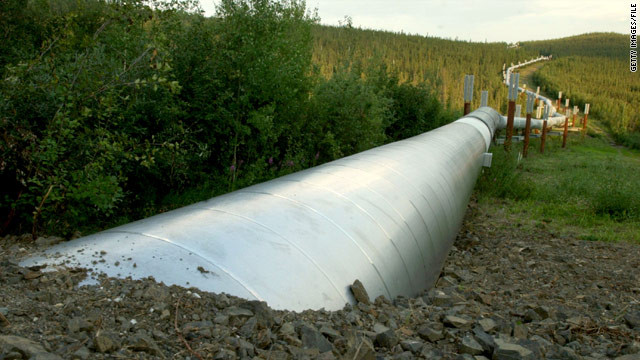
Keystone Pipeline Delayed Until After Election Year

The Obama Administration delayed approval for the Keystone XL pipeline extension from Canada to the US Gulf Coast. Yet another move to play it safe and place political strategy ahead of real economic due diligence. The administration decided to play it safe and dismiss any decisions on moving forward until 2013, one year beyond the 2012 presidential elections.

The current Keystone pipeline starts in Hardisty Canada and extends down the US mid-west belt to St.Louis. The proposed Keystone XL pipeline project will push westward, passing through the borders of Nebraska's Ogallala aquifer to reach the southern tip of Houston Texas and Port Arthur Louisiana. The estimated $7 billion project has been in talks for decades, and the US government was supposed to follow a schedule of 12-18 months of logistic, economic, and environmental studies.

Instead, the delay will decrease optimism among US shippers and refiners, Canadian oil sands producers, and job hunters from both sides of the border. Gulf Coast refineries need certainty about their supplies; delaying their scheduled deliveries one year out (along with the time needed to build), is enough reason to forget the idea of getting oil sand crude altogether.

Aside from the fact that the US clearly does not have an energy plan, it's also puzzling as to why the government allocates so much time for review and political strategy, but does nothing in preparation for new projects. It would be logical for the US to beef up safety precautions such as engineering barriers and enhanced filtration to make way for a project that is sure to develop some ROI for the neighboring states. Issuing a municipal bond to bring the infrastructure project into fruition, while paying back those bondholders with revenue generated by industry productivity is a solution that makes sense. We need a collaborative approach to work around constraints to maximize capital, labor, and productivity resulting from the pipeline project. Canada deals with the production, the neighboring states deal with optimizing economic gain from the pathway, and Houston and Port Arthur deals with the inflow of oil sand crude and delivery to the nation.

Another year of bickering does nothing when no one is willing to get serious. Canada must be laughing in a field of oil sands right about now. We can't blame them.