quotes

Showing posts with label Canada. Show all posts

Friday, June 7, 2013

Markets show focus on Fed after employment report

*May NFP: 175k vs 163k, downward revision by 12k for previous 2 months

*May Unemployment Rate: 7.6% vs 7.5% exp


Despite the US economy adding more jobs than expected for the month of May, the breakdown and trend are still meager. We're not out of the woods yet, and at this pace, the Fed is less likely to back down without significant labor market improvements.

There was not much excitement on the headline figures, but it does show that the trend in payrolls is broadly flat. The breakdown shows consistent gains in the service sector with low wage jobs capturing a larger share of the labor market. After looking at the employment reports from the past few months, the May report provides further proof that QE efforts are providing little help to boost employment. The Fed is clearly looking for significant improvement to break above trend in labor growth; unfortunately the monthly change in nonfarm payrolls is not enough to sustain a recovery. We will need to see consistent gains above the 200k level supported by wage growth and other economic improvements for the Fed to send a clear signal of optimism. Even so, the worry still remains that monetary stimulus has gone too far and perhaps we will need stronger fiscal policy to help speed up a recovery.


The markets believe that the Fed is less likely to ease off the pedal given recent data. FX markets were choppy with the USD given a modest boost with most pairs. Treasuries pared earlier gains as yeilds moved higher with the 10yr up 3 basis points to around 2.12% following the employment report. Yields have bounced off 1.60% support to show a firm rise for May as the bond sell-off leaves many in question. It's really all about the Fed at this point, and the summer FOMC meetings will be very important for any sway or persistence on the scale of asset purchases. Remember the weak ISM report sparked an initial safety run to treasuries, but the rise was short lived as the markets remain weary over an indecisive Fed. Stocks opened firmly in NY, giving a clear signal for the Fed to remain in action.

We still have a recovering housing market, but pay attention to 30yr mortgage rates nearing the 4% mark which could slow the recovery. Many investors are driving the demand for new homes, so the underlying picture of broader economic growth is still in question. Consumer spending is picking up, but we still have some fiscal problems looming with sequester cuts having a negative impact as well.

Canada - Hold your applause

The employment picture looks a lot better north of the border as Canada added 95k jobs in May, mostly full-time. Unemployment inched down to 7.1% with construction adding 43k jobs in May, marking a 5.8% rise y/y.

Although this is a stellar report, worries still remain about the housing bubble, especially given the rapid growth in construction jobs. Construction has been the main driver of these good headline prints, and we have to wonder about what this means for future supply of new homes as the demand side grows a little skeptic.


A report by the OECD labels Canada as the third most overvalued real estate market in the developed world - no surprise there. Look back at April 2013 building permits which shows that Canadian municipalities issuance was up by 10.5% from March due to higher construction intentions for multi-family dwellings. The total value of permits is now back above trend. Meanwhile, declines in institutional and industrial construction remain. Household debt and expenditures are troubling, yet there is more housing supply on tap. You can keep building, but home buyers are aware that prices are just too high to enter right now, and will eventually force that much needed correction in housing prices.

Thursday, April 11, 2013

Economic Update - Are we in transition mode?

There is still an air of economic uncertainty in the US, but there is hope. Hope that this year will mark the start of a recovery. The struggle to reach that point places an emphasis on the string of economic indicators and the reality behind them. We know that the Fed is keeping a close watch and is considering its options should the economy show signs of strength later this year.

March FOMC Minutes

The latest minutes were released early to several high ranking officials and the joke goes that if they can't get an email right, what makes us so sure that they can get the timing of a QE exit correct. Nevertheless, the minutes for March were released to the public during the morning hours EST instead of the usual afternoon time. It showed the evident discourse among FOMC members about when the phase out of the controversial and much extended QE program (reaching a record $3.22 trillion) will occur. We get a feeling that the consensus is for later this year when some economists expect a pick-up in the US economy.

Even still, members said that if labor market conditions improved as anticipated, it would probably be appropriate to slow purchases later in the year and eventually stop by year-end. There is still the possibility of returning to QE-lite because uncertainty still lingers, and the Fed might feel the need for continued support.

The debate over when to put a nail in the QE coffin is nothing new. The past few minutes have brought to light the concerning nature about balance sheet risk and the economy's ability to continue growth without the artificial push. The first mention of this was back in Q4 of 2012 which sparked an immediate stock market sell-off. Now, investors are aware of the ageing QE program, to the point where recent attention shifted to negative news from Cyprus which then caused a plunge in treasury yields.

The Breakdown

We can't ignore the healthy rise in equities. Some wonder if it is inspired by QE or just last minute bids on a general fear of missing out on some good gains. The fact is that QE has shifted asset allocation away from the usual safe-havens and stimulated a risk-on investment environment. But we have to take a step back and remember the fundamentals behind the recent low from early this year in which equities used as support for a rally. Stock market gains are not matching earnings and economic data, which suggests that a mix of sentiment and the quest for yield is the driving force. The stock market was bogged down with debt ceiling and fiscal cliff bickering at the start of 2013 which created a good buying opportunity. Technicals looked right and investors took advantage of the dip.

A deeper look into the economic fundamentals display some evidence of a transition to recovery. We see wealth gains mainly in the form of equities and a pick-up in housing construction and building activity. Consumers are still deleveraging which allows for spending. For example, refinancing could mean that savings are free to be allocated to more productive areas such as home improvement. A deeper look into the data gives us an understanding of how consumers are economizing during the economic transition.

Consumer debt has dropped to more comfortable levels, and credit can pick-up to reflect some confidence in the consumer's ability to borrow. However, the employment picture looks bleak. With a significant decline in labor force participation and a stagnant low-wage environment, there is little evidence to support a healthy labor market. Most of the activity is coming from the capital side of the growth equation. The fact is that most are under-employed and we are seeing households stick together - income sharing to phase out the negative in anticipation of a return to normalcy in which every member of the household is fully employed and self sufficient. Until we get there, a lot of the data might reflect only a half-truth.

We also have a demographic battle in which economic activity is missing the matriculation of first time buyers and the fresh labor pool of earners and spenders. The stark reality is that student debt is holding back the younger population resulting in higher defaults and the lack of entry level opportunity that is commensurate to the cost of study. Close attention to the Northeast housing and consumer market will be an important indicator to track this, as a great share of college graduates populate that region.

China marches back, but the West still looks ill

Good China trade and industrial data caught investors by surprise. There is a renewed sense of optimism in emerging markets overall. But some concerns over China's local debt problems and demographics keep the longer term outlook on a tightrope. The hope is that the new government will be quick to address these issues.

We will need full strength of the West for a clear sign of a global pick-up. Europe still looks weak with new sprouts of headline cases like Cyprus still in the mix.

The uncertainty is still there - look at the peso's fall against the greenback on Thursday as a signal that there is some concern about the ability of the US to boost the global economy. The Americas need the demand from the US, and LatAm markets can be an important indicator for foreseeable strength in terms of trade.

Long term view relies on current policy action

At some point, we will see sustained growth. Whether it starts later this year or rolls into 2014, there is evidence of transition and signs of hope. But the real question is how will we be able to keep the economic engine going.

Take a close look at the coming budget negotiations. Approach the issue with a clear mind and hear out both sides. Compromise on a long awaited budget will pave the way. We desperately need a framework to guide us through a recovery, or else we will get more of the same out of control spending and borrowing. There is doubt that whatever deal is reached, it will not be enough to address the serious fiscal deficit issue and economic folly that is inherently structural.

Immigration should be an important focus to keep the US as the most reasonable place to innovate. Innovation is part of the global market, and we must remain competitive. Higher education is taken up by more foreign students who will be at the helm of the growth. Look at Canada's latest plan for guidance.

Lastly, there is belief in the states. Despite underfunded pensions and liability short-falls, states have been busy strengthening their fiscal position. Most states are in a good cash position and the supply of municipal debt has declined. Investors are starting to see less risk, and the latest Census data shows an increase in state tax revenues. The revenue plans are highly strategic and take advantage of areas of productivity such as drilling out West. Some regions of the US are doing far better than most, and perhaps there's a good  model out there for solid growth.


Thursday, December 20, 2012

Facing Austerity. Head-on.

Assuming this isn't outdated by the Mayan calendar, 2013 will be the year of austerity. It's already here, but its impact will be more apparent in the coming year as it dampens the extent of a full recovery as governments continue on with an unbalanced check book. This process is inevitable and in some cases necessary to break out of an economic slump with some sort of fiscal sanity. The problem is not just in the US where this coined term of  a 'fiscal cliff' is actually what has been planned; its just the extent and distribution of the scale-back that's up for debate. As expected, the developed world is set for a stalled recovery with room for only modest improvement that will still lie below full  potential, especially given the new Fed thresholds on employment and inflation. Emerging countries will continue to face some struggles, but they will be busy stimulating during this time.

Some form of the fiscal cliff is inevitable. The fiscal framework of our nation is designed with limits to be  amended as we go to ensure that we are somewhat responsible to continue running the country on a balanced footing. This is why Congress has the power of the purse, but constant partisanship never gets us to that ideal point of leadership. In this case, we see extreme political strategy that surprisingly hasn't seen the kind of backlash that Europe has. The fact of the matter is that each proposal includes spending cuts that target many entitlements that we have grown accustom to but are clearly unsustainable. Our complex tax code deprives us of key revenue while the spending outlook will continue to dig us deeper into deficit. Whatever is agreed upon will still decrease our potential to accelerate economic growth.

We must address the political strategy, because this will determine whether or not we will ever get it right. The White House has cleverly used this 'balance' myth by shying away from real reform and spending cuts. If you really dig into the budget, many of those line items are highly sensitive because so many people rely on entitlements especially during these times. No one is willing to take bold action, and would rather gradually scale down the effects of costly programs that truly have a demographic mishap such as social security and medicare. When Republicans pressure spending cuts and reform, the White House has blamed lack of revenue as the reason for imbalance and then automatically factor in tax hikes and cuts on the middle class to show the 'only' way to balance the books. This type of thinking is a far step-back from reality.

Governments Ready?

Elsewhere in the developed world, governments have realized the problem and are cutting their forecasts. Canada, which relies on a US comeback in order to fully push on with full potential, has pushed its expectations back by one year to around 2015 when the country should return to surplus. The country also decreased its revenue projections over five years, and will essentially rely on decreased government spending in order to balance the books. In the UK, the Autumn Statement called for a decrease in welfare entitlement spending which caused quite a stir among its dependents. The ECB decreased its growth forecasts for the eurozone, and Germany is set to feel a pinch with declining industrial production. Lastly, Australia's Finance Minister Swan admitted during an unscheduled press conference on Thursday that the country is unlikely to achieve a budget surplus this year, breaking the major platform in the Labor Party's election pledge. Meanwhile, Australia's Prime Minister Gillard is on vacation; once again shying away from addressing fundamental issues.

Greece is a special case. Yes, we all know this. But it has essentially become the hallmark of austerity, and could set precedent on how its done (whether the country is proceeding in the right or wrong direction is a separate discussion). The fact is that Prime Minister Samaras is quick to work on structural reforms and grow the economy as part of the strict terms of its long awaited aid tranche of short term rescue loans. Closing in on its  sixth year of recession and +20% unemployment, Greece's real problem is demographic. Greek youth are fleeing the country, choosing school over work, or are busy protesting austerity in the streets of Athens. The country is one of the worst in the world for setting up a businesses given the impending legal costs, and the businesses that do come to fruition are short lived. Most of the people are employed by the government; and working for a broke employer disrupts the dependent system to begin with. Austerity at its finest. Or maybe just pure socialism.

Central Banks Prepared?

Central banks are ahead of the game, but it still won't provide a full cover-up of the underlying fiscal set-back. The Fed removed its 2015 guidance and agreed on additional asset purchases which suggests that the US economy is still under performing. The RBA cut rates and hinted at a mining peak which should help prepare for some fiscal tightening down the road for Australia to eventually reach a budget surplus.

The bottom line is that fiscal tightening is ahead, and this will force us to struggle along the recovery stage, performing below our full potential. Banks may have access to easy capital thanks to the easing mechanisms of central banks, but that money will remain stashed on the balance sheet until the political storm passes. Businesses will not invest unless there is some certainty on corporate taxes and the consumer's ability to be productive. We will all be a bit shaken with a change in the status-quo.

Check out: Rising stars of the fiscal cliff - Maya MacGuineas of Fix the Debt

Wednesday, October 3, 2012

Long term troubles for the US and Europe despite year end breather. Who will win?

The events of the past few weeks suggest that a forceful attempt to get things right by year end will only last for so long. The authoritative approach by frustrated central banks; Germany's clever stalling strategy with Spain; and corrections in Canada's housing market, all point to a much awaited year-end breather. This is what we want to see, but the long term outlook is still troubling.

Let's start with Spain.

On Thursday, Spain announced its budget and economic reform measures which includes planned spending cuts for 2013. The government stated that the 2012 revenue target will be met, but plans to tap 3bn euros from the Social Security reserve fund to cover pension payments was quite the shocker. 

The fact that the demographic make up of Spain skews towards the elderly, coupled with high youth unemployment means that these crucial reserve funds are not growing at a sustainable rate to accommodate the pace of payouts.  Austerity measures will lead to further slowdown with no major growth in employment, and Spain will need to find a way to meet its liability needs; a larger pool of government dependents being one of them. Policymakers need to remember that most Spanish households actually rely on the retirement payments from the elderly family member to stay afloat.

Sunday, September 16, 2012

Bank of Canada dovish on Western friends, positive on China

On September 7th the Bank of Canada issued a report concerning the dutch disease; with Governor Carney's remarks intended to ease concerns about the high Canadian dollar's adverse effect on trade sensitive sectors. However, the report failed to address how policy makers will respond to Canada's growing troubles in manufacturing productivity and inflated housing sector. Instead, the report shared some insightful information on the BoC's negative outlook on the US and Europe. Canada is strategically aligning its economy to meet the long term resource demands of the emerging world, most notably from China.

Canada's global projections are on point and deserve greater attention. It is in Canada's best interest to remain well informed about the global economy.

Sunday, September 9, 2012

The case for QE3

Following a week of disappointing economic data, QE3 is no longer a matter of if, but when. Higher input costs, stagnant employment conditions, and an approaching fiscal cliff are all factors that increase the pressure on the Fed to act. Despite some upticks in manufacturing activity (especially with Q2 productivity coming out better than expected at 2.2%, with lower labor costs), we should expect the Fed to be unfazed by "slight improvements" in the economy. The fact of the matter is that the economy is performing below expectations, and as history shows, the Fed is not one to miss a prime opportunity to deliver.

It seems as though QE is implemented right at the inflection point of employment. When employment increases and nears a peak, the Fed delivers. Right after, there seems to be a decline in employment. This could be that the Fed anticipates a decline, or that QE is not working to boost employment. The former point should be used by outsiders to anticipate Fed action at the peak areas of employment. The graph below shows the timing of the strategy.


Judging from the Fed Minutes last month, and Bernanke's Jackson Hole speech, it is clear that the economy has failed to deliver signs of growth by Fed standards. There seems to be a big concern on employment - specifically the long term unemployed. The latest jobs report showing a decrease in the labor force could indicate that many people have stopped searching for work.

Certainly, with Draghi finally laying out some details of unlimited bond buying, the pressure is now on the US Fed to come up with a strategic plan of its own.

Tuesday, August 28, 2012

Soft Landing Ahead for Housing Markets in Canada and Australia

Global housing prices rose steadily from 2001 to about 2008 when the bubble eventually burst in the US. The problems in the US were a special case as a growing system of over-leveraged banks fueled by government subsidized guarantees led to a hard landing. During this time, resource driven economies such as Australia and Canada experienced a minor correction. With prices continuing to rally despite global deleveraging, China's major trading partners will bear the brunt of a soft landing. However, China's desperate need for resources will stabilize the imbalance.
The chart above clearly shows Australia, Canada, and Hong Kong being stubborn to the US correction post-08. Hong Kong's prices have risen sharply due to artificial demand as part of China's economic plans. Expect a major correction soon; stabilized afterward as China undergoes more "laissez-faire" economic reform.
** Click here for full interactive chart. Look at Sweden and South Africa! Poised to pop soon. **


Canada's Banks are Well Positioned, But Worries Remain


Thursday, November 10, 2011

Keystone Pipeline Delayed Until After Election Year

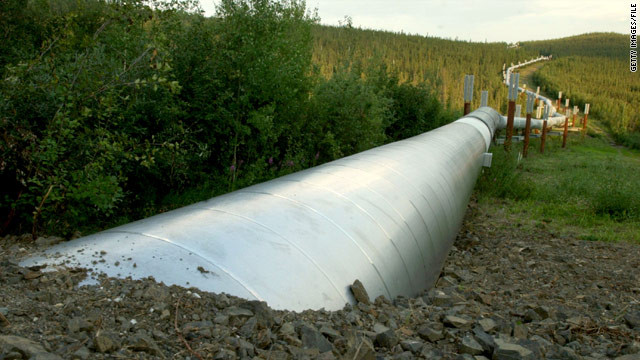
The Obama Administration delayed approval for the Keystone XL pipeline extension from Canada to the US Gulf Coast. Yet another move to play it safe and place political strategy ahead of real economic due diligence. The administration decided to play it safe and dismiss any decisions on moving forward until 2013, one year beyond the 2012 presidential elections.

The current Keystone pipeline starts in Hardisty Canada and extends down the US mid-west belt to St.Louis. The proposed Keystone XL pipeline project will push westward, passing through the borders of Nebraska's Ogallala aquifer to reach the southern tip of Houston Texas and Port Arthur Louisiana. The estimated $7 billion project has been in talks for decades, and the US government was supposed to follow a schedule of 12-18 months of logistic, economic, and environmental studies.

Instead, the delay will decrease optimism among US shippers and refiners, Canadian oil sands producers, and job hunters from both sides of the border. Gulf Coast refineries need certainty about their supplies; delaying their scheduled deliveries one year out (along with the time needed to build), is enough reason to forget the idea of getting oil sand crude altogether.

Aside from the fact that the US clearly does not have an energy plan, it's also puzzling as to why the government allocates so much time for review and political strategy, but does nothing in preparation for new projects. It would be logical for the US to beef up safety precautions such as engineering barriers and enhanced filtration to make way for a project that is sure to develop some ROI for the neighboring states. Issuing a municipal bond to bring the infrastructure project into fruition, while paying back those bondholders with revenue generated by industry productivity is a solution that makes sense. We need a collaborative approach to work around constraints to maximize capital, labor, and productivity resulting from the pipeline project. Canada deals with the production, the neighboring states deal with optimizing economic gain from the pathway, and Houston and Port Arthur deals with the inflow of oil sand crude and delivery to the nation.

Another year of bickering does nothing when no one is willing to get serious. Canada must be laughing in a field of oil sands right about now. We can't blame them.

Tuesday, March 8, 2011

What Should the US Do About Rising Oil Prices?

Unfortunately, this question seems of high importance when energy prices rise. However, people tend to forget about the problem when prices decline to normal levels. The fact of the matter is that high energy prices are a good signal to whip us into shape. The longer we wait to correct the problem, the more susceptible we are to volatility.

The truth is that oil is in low supply, and in high demand; thus reflected in its price. If the supply was of comforting amounts, 8% threats would be of little concern. Too much of the world is dependent on the Middle East for its oil imports, and too many in the west fail to realize the impacts of continued demand for the stuff. Does it not seem odd that most of our foreign relations and wars are focused in the very region that fuels our economy? We need a comprehensive energy plan - an all of the above approach. This is one sector of trade in which some degree  protectionism works. Energy production for domestic consumption trumps the status quo. America is abundant in natural gas, solar and wind corridors, and more.

We can leverage this opportunity even more by utilizing NAFTA to operate what I call a strategic North American Energy Alliance  (NAEA): tapping into onshore and offshore drilling areas, contributing to our strategic oil reserves, natural gas exploration and development, incentives for cleaner and sustainable drilling innovation, expanding the wind and solar corridors to power grids that connect the North American continent. Canada is already skilled in extracting oil from tar sands, most of which exported to the US. Mexico's control of most of the Gulf region contributes to their comparative advantage in oil, exporting to the US. Our contribution needs to be significant. We need to produce enough for domestic use, and then some for the export advantage to China and India. If anything, we need to act fast on a plan like 'NAEA' before China does. 
There are many ideas on the table. Bowing down to the Saudis should not be one of them. James Cramer, the energetic host of Mad Money on CNBC made this statement
First, Cramer said the government needs to sell oil futures contracts against our strategic reserves to stop the jump in oil prices. Second, the U.S. government must be vocal about its support for Bahrain and Saudi Arabia, which will help prevent unrest from spilling over into these regions. Finally, Cramer said Congress must pass the natural gas act to subsidize 18-wheelers converting from oil to natural gas.
The government and US based oil companies already sell oil futures. But, apparently its not a fix all solution. The price we pay at the pump could be so much more if it were not for the futures market. The fact that there is so much panic over near $4 at the pump means we are in serious trouble if the 'real' price comes to light. I'm in support of the Natural Gas Act, and of course for the US having its two cents about peace in the Middle East. However, the massive amounts of aid and imperialist like influence in the region is disturbing. We are disliked because of our influence, no matter how much we try to mask this with a message of peace. The aid flows stir violence to create an unstable society for the US to offer a promise of modernization ("a human right?"), all for the control of what lies beneath the sands of Arabia - that is oil. It's a long term agenda that will leave us in a world of hurt. It's better to hone in some domestic strategy opposed to meddling with so called buddies who play us blindly.

Here's a video of former Vice Presidential candidate Sarah Palin. Her remarks on the need for energy independence are spot on. Our abundance in resources are clear, and its about time we use this.


I'm also a strong supporter in an all of the above approach. T Boone Pickens also has a plan that will reduce our reliance on foreign oil.


Tuesday, June 8, 2010

G-20 Wants less Export Dependency, more Domestic Demand

With the global financial mess escalating and volatile markets speculating currency and bond values, it’s convenient for global financial leaders to convene and discuss solutions. I’ve been listening closely to these G-20 discussions, and some good points are finally being brought up. The issue of deficit reduction is a first step. Everyone knows that this is a major problem; certainly as the sovereign debt crisis spreads across the Euro zone. More countries, such as Hungary, are now stepping up to alert the world of their financial concerns of unsustainable debt. Central banks and bondholders are working to relieve these issues, and the G-20 is proposing ideas on how to calm financial markets. The idea of a universal bank tax was shut down. The new idea that has some potential is for larger capital holdings so that taxpayers will be protected in the event of another bailout. Canada is weary of this new proposal because their banks are already subject to strict regulation. Universal regulation does not work well with certain countries that have specific economic conditions.

Most of the financial ministers warned about the unsustainable approach for recovery by relying on exports. This explains the risk factor in export based economies. These remarks are a direct blow to countries like Australia and Canada. Despite rising interest rates, and stronger export numbers, the Australian dollar took a major nose dive recently because of worry about risk. Not only the risk of the global financial crisi
s, but their export dependence and the need for domestic growth. Perhaps exports are fueling a domestic recovery, but how long will that last? China will not always demand commodities at such a fast pace. The Chinese realize that they are importing too much, and must balance a trade deficit by exporting more. Bad news from China directly affects the Australian economy.

But it’s hypocritical for the US to call out other countries for relying too much on exports. Obama vowed to double exports in his State of the Union address, and we have continuously placed pressure on China to allow their yuan to appreciate so that the dollar will be more attractive to the international trade
market. A stronger dollar in response to the Euro crisis did not help with this goal of increasing exports. However, the appreciation of the yuan might help. The Chinese yuan is pegged to the dollar (buying US dollars to regulate their currency value), so the free markets don’t have much say in the true value of the Chinese currency. The US has even accused China of manipulating the value of their yuan.

Trade will definitely help with boosting the economy, but the G-20 members are correct that domestic demand must pick up to sustain a recovery. Meanwhile, Fed Chairman Ben Bernanke is speaking out about the domestic economy. In a speech this week he warned that unemployment numbers may remain high, but the Fed will raise interest rates ahead of a recovery. The markets anticipate a rate increase during the first quarter of 2011. Following the G-20 advice; a stronger domestic economy should be our main goal.
--below is a chart of China's Balance of Trade:

Saturday, May 22, 2010

Why Canada Needs a Rate Hike

It's the moment we've all been waiting for; Canada is finally pressed to raise interest rates. I saw this coming after Australia and New Zealand experienced a rapid recovery and their central bank worked to tame it with higher interest rates. Those currencies rallied in response as the rest of the world continued to struggle with stimulating a recovery. The "rest of the world" are those countries with high exposure to the global financial crisis; United States and Euro zone members to be exact. However, there's one special case up north. Oh, Canada with its geographic proximity to the source of the crisis, one wonders why they did not experience severe effects.
Canada has a very conservative banking system with strict regulations from the federal government. Most of the big banks up north did not have much exposure to the complex derivatives that went sour. Also, in response to the crisis, Canada did what most other nations did - enforce a national stimulus package. A stimulus that was focused on investments with a purpose of supporting growth of the markets to fuel recovery. A different approach taken in the United States with a stimulus package, most of which remains unspent, that focused on supporting growth of government.
The industries and consumers of Canada, equipped with the right incentives, are fueling a recovery that continues to beat expectations. an economy expanding beyond planned, Central Banks must act. In Canada, retail sales have increased to a record C$37 Billion and is projected to rise even further, and core consumer prices and inflation rose by 0.3% to 1.8%. Throughout this past year, the Canadian Dollar has outperformed the US Dollar by 7.2%. These positive economic numbers continue to put pressure on the Central Bank of Canada to raise interest rates.
However, there are still issues that may cause the central bank to keep interest rates at the current level of 0.25%. The European Sovereign Debt crisis has created a burden on western markets. One effect is the recent decline of commodity prices, which negatively effects Canada's economy. Perhaps, because of the United States' slow recovery and weak economic data, Canada remains worried. Interest rate management is a tricky part of monetary policy, and the Bank of Canada is weighing the risks. Inflation is rising beyond expectations, the currency is strengthening, and housing prices and household debt continue to rise sparking fears of a housing bubble. However, the debt threats and exposure to the US may cause central bankers to believe that the time isn't right.
There is evident risk in the global market, but the central bank needs to raise rates. Central Bank Governor Mark Carney hinted that there will be no rate increase until July. Economists predict that rates could rise as soon as June. The markets are ready and the pressure is on. Investors should prepare for this, whether it be this month or next. If rates do not increase in June, expect the Canadian dollar to decline as investors express their frustration. If this is so, then we can be certain of a rate increase in July, as planned. Either way, when Canada raises rates, Dantes Outlook will remain long the Canadian Dollar throughout their recovery. Consider Canada the next Australia. Certainly as China demands more commodities, and domestic conditions continue to improve, Canada will do well.

Friday, February 26, 2010

The Export Driven Recovery

The race to positive GDP is in full swing. While the Euro zone gets all of the negative attention, and the US shines in response, the recoveries elsewhere are casted into the shadows. In the FOREX marketplace, no country is left unnoticed, so I decided to zero-in on three export driven commodity based currencies: New Zealand, Australia and Canada. These countries have a strong portfolio of natural resources that are in high demand, and make up a significant portion of GDP. This causes high volatility in their currency performance because they move according to commodity prices. However, the global recession provided a much needed boost for these countries.

New Zealand
Always used as a great case study, New Zealand had its ups and downs as their Central Bank scrambled to tame a growing economy. Following in Australia's footsteps, New Zealand issued a major stimulus plan that was focused mainly on investments with an eye on return. Because their economy is not as exposed to the global financial markets, the effects of the recession was not as severe compared to the US and Europe. New Zealanders suffered high unemployment as businesses faced pressure from lack of confidence and funding from banks. The stimulus provided an extra boost and sent housing prices back to comfortable levels. The Central Bank raised rates to tighten the recovery, and its currency rallied in response.
Despite the current positive news, New Zealand faces a tough year ahead. They must find a way to pick up the missed pieces of their second major recession in almost 50 years. The massive stimulus may have been too much, and government debt is projected to increase to nearly 35% of GDP by 2015. This could call for spending cuts and higher taxes; both may accompany higher interest rates and other monetary stimulus withdrawals.
The full response to handling stimulus pull back will be gradual, but the New Zealand government is taking some major steps forward. Once again, returning to exports, New Zealand recently began talks with India to end trade barriers. India will be a major player in the global marketplace as their economy shifts from agriculture to manufacturing. Demand for natural resources will be high, and New Zealand has found a specific trading partner.

Australia
Similar to New Zealand, Australia was not as exposed to this financial crisis. However, the banking industry is big enough cause economic suffering. A stimulus was implemented, and the nation quickly rebounded. Australia was one of the first countries to come back with an interest rate hike. New monetary tightening measures are always coming out of their Central Bank, and investors have scrambled to profit from the recovery down under. Again, the government must pay attention to debt and cost cutting measures.
Exports have long been Australia's strong focus. One of the major players in the Asia-Pacific Economic Cooperation (APEC), Australia has responded to China's increasing demand of natural resources. The country boosted exports in coal, iron ore and steal to benefit from China's industrial boom. They realized that China and other emerging powers will dominate the global landscape as rich countries stumble. Prime Minister Rudd made strengthening ties with China his main agenda during his election. He speaks Mandarin, and is often seen shaking hands with Chinese trading partners. Exploration, development, and exporting is at the heart of the Australian economy. The country must diversify their scope of investments and try to even out their focus on domestic demand.

Canada
Canada is a major exporter of Natural Gas and investments in offshore drilling and mainland exploration up north ensures confidence in their export driven economy. The country's proximity to the US hurt its economy after the effects of our recession spread north. However, using natural resources as a hedge came in handy. Canada is involved with more projects extending northward into the untaped arctic regions, neighboring Alaska, and new pipeline deals linking the far west to the US mainland.
The country isn't just built on oil and gas, but the diversity of their economy is well evident after the stimulus concentrated investments in various sectors. The recovery is slow but better compared to their major counterparts like the US and Europe. Industries such as real estate have experienced a strong reversal. Home prices have nearly risen 0.5%, and there are even talks of another housing bubble.
Last year, the Central Bank stated that Canada's recovery will be shaped like a hockey stick. A V shaped recovery is likely, but should be handled with caution. Expect some interest rate hikes (perhaps this year), and a booming housing sector. The Vancouver Winter Olympics provides a boost to the western economy.
Employment is still a problem, but the deficit is slowing down.
-------
Commodity currencies should be short term investments. Ride the volatility wave while the Central Banks release their stimulus withdraw plans. Short when commodity prices decline, or if the US and Europe rebound. Over the long term, the fundamentals explained in this article ensures positivity for New Zealand, Australia and Canada.

Saturday, June 23, 2007

WalMart Canada Saves Energy By Dimming Lights!

Following the previous gender discrimination law suit, WalMart attempts to stay positive with another PR push. The company's latest move is to become "green"! The new "environmentally friendly" WalMart demands smaller packaging containers and now energy efficient store lighting. The move will be better for the company's Canada stores because it will save them money and take away the negative publicity. Currently, WalMart has 240 stores in Canada and the new method of dimming lights is expected to save about 4,500 tons of carbon emissions during the summer season. I think that this is a great move for WalMart to become liked by the public. I still think that the company needs some one in charge of ethics but I'm all for the environment and agree with the project. Word on the street is that WalMart will use LED lighting in refrigerators supplied by CREE Inc. which will lower the company's energy use. WalMart states that their mission is not to save money but instead save the environment. Go WalMart!


**********STREETBLABBER APOLOGIZES FOR THE UPCOMMING LAPSE AT WHAT IS DEEMED TO BE AN EXCITING ACCOUNTING PROGRAM HELD AT PACE UNIVERSITY!!!! I WILL BE GONE FROM SUNDAY, JUNE 24TH TO THURSDAY, JUNE 28TH***************