quotes

Showing posts with label Dantes Fund. Show all posts

Monday, July 23, 2012

Time to Buy Silver


As Western economies attempt to avoid a double dip, the slowdown has formed an attractive buy price for Silver (SLV) at $27. However, easing tactics will increase fears of inflation, and China’s international development strategy is sure to fuel a Silver (SLV) rally to $45.

The global economy is on a tightrope. Growth is on the agenda, but structural issues continue to deter a comeback. Asset buying programs are in full effect, and currency depletion in the developed world will surely cause inflation. However, the downward spiral creates opportunityfor investors. Consider the events of the past two weeks as proper causality to the coming silver rally.

Past headlines were flooded by what seemed to be a coordinated easing tactic by central banks. The ECB decreased interest rates to 0.75% and cut the overnight deposit rate deeper into the zero territory, joining the US and Japan. The Bank of England announced QE measures, a bond buying program meant to increase lending to jumpstart the economy. News out of China demands greater attention for our purpose of being bullish on Silver. China’s slowdown is meant to decrease demand for building projects, thus causing a decrease in the price of Silver and other basic materials. Silver’s four month decline was driven by the fear of decreased demand.

Despite China’s slowdown, we must remember that even 7% growth is good. Citing a prolonged Chinese slowdown is completely short-sighted. The country’s domestic economy is need ofimprovement, but international investment is booming, and will surely add to the demand forbasic materials. China’s easing measures such as decreasing the benchmark borrowing cost will fuel growth at home, while promoting an aggressive international investment strategy. Partnerships with Argentina and Tunisia for building projects in return for access to agriculture and crude oil must not be forgotten. Furthermore, the ability to supply materials highlights a more specific investment opportunity.

iShares Silver Trust, ETF (SLV) is a less risky bet. Pricing at $26.48 at the time of this report, provides a good discount for a buy opportunity. Keep in mind that SLV is stil lpositive for the year despite the four month decline, reversing from a February peak when China reduced its growth target. In terms of meeting Silver supply, consider First Majestic Silver Corp(AG), a silver producing mining company based in Mexico. AG has an aggressive developmentand acquisition plan to produce 8-9 million ounces of pure silver production this year.

First Majestic is rapidly growing, and its strategic location and timing of extraction is key to meeting demand while benefiting from the coming Silver price rally. AG operates 3 productive mines, and has 3 under development. On May 22nd, AG issued a technology report and pre feasibility study of its Del Toro Silver mine. By 2014, the estimated production at Del Toro is expected to reach 9.7 million ounces of pure silver. The development requires $124 million of capital, and is forecasted to produce a 43% IRR over a 6 year production life and a 2.5year payback. Accounting for the upcoming speculation once Silver pops, knowledge of AG’sdevelopment plans and positive studies will be factored into the stock’s rally, heavily correlated with SLV’s uptick.

AG is in a strong financial position, with little debt and positive cash flows to help aid expansion. The only negative on its balance sheet is exchange rate risk.

To recap this buy recommendation, I am confident that SLV and AG will rally due to the continued economic decline of the Western economies. Demand and speculation will drive the rally. China’s international development investments to capture resource wealth will require material usage, and the easing programs of the West will devalue currency and lead to inflation.

A potential negative is if China continues a decline and does not demand materials. The globa lslowdown could continue to bear down on the price of Silver. However, the charts strongl ysupport a buy opportunity.

Here’s the gameplan:

AG is right around the $15 support level, and has the potential of rallying to $20.

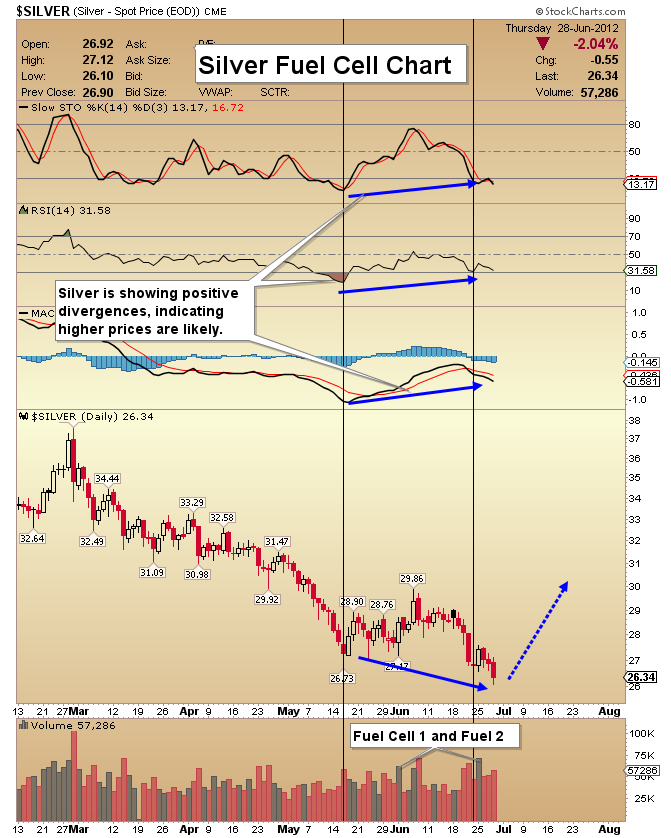
SLV is also around a critical support area at $27 and has the potential of rallying to $35-40,holding on near the $45 resistance level. See charts below.*Time horizon for buy is 4-6 months, reaching the $40-45 price level in SLV.

-Damanick Dantes


Additional charts:

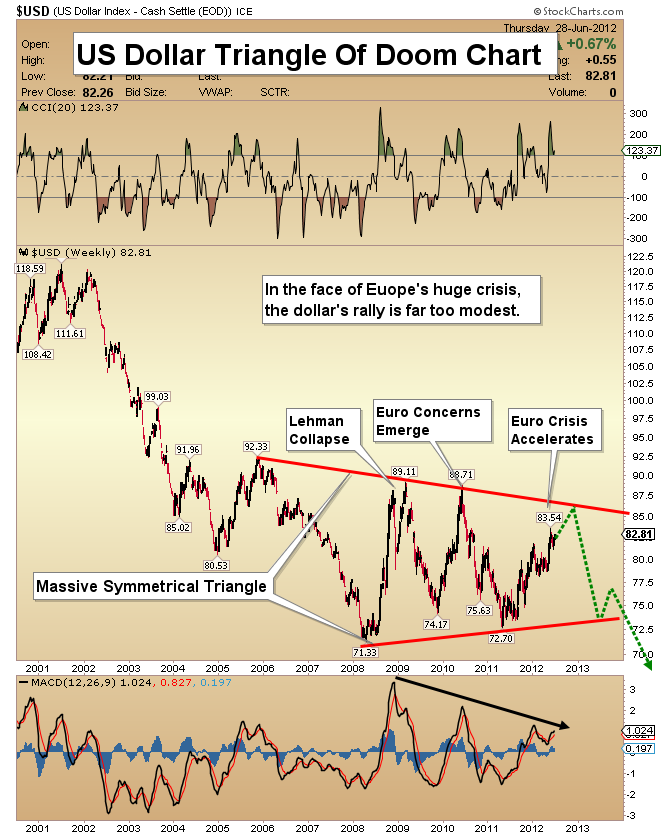
US Dollar decline technical forecast: http://www.gold-eagle.com/editorials_12/images/hubbartt062912a.png

Silver uptick: http://www.gold-eagle.com/editorials_12/images/hubbartt062912g.png

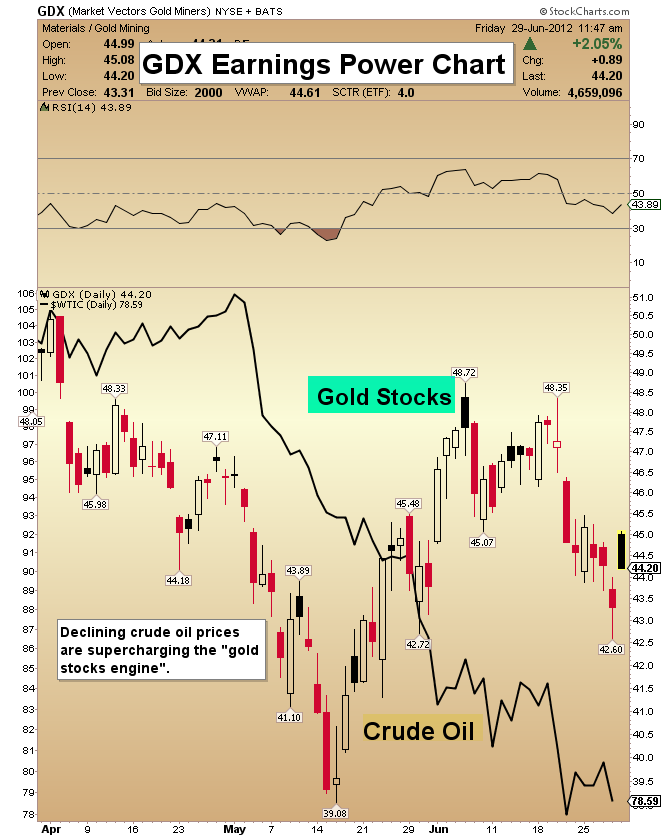
Crude Oil decline fuels Gold uptick: http://www.gold-eagle.com/editorials_12/images/hubbartt062912e.png


Sunday, March 21, 2010

Shorting EURUSD

This trade was a roller coaster that turned out profitable. I decided it wasn't too late to enter in a short on EURUSD considering Europe's ongoing budget woes. There was a high when I entered the position, then I immediately began to lose money when an upward trend followed. I maintained my position for a while and then began working on a trading plan. The economic calendar for the US Federal Reserve showed that there will be an OMC meeting later that week. Considering the US economy is not in a full recovery to boost interest rates, I projected the EURUSD currency pair to rally to a certain point.
I was correct. Traders expressed their dislike of the Fed's decision to leave interest rates at a low level. I lost some money from the start, but I kept a close eye on the technical indicators for a reversal. A double top occurred that confirmed a drop was near. The US interest rate report was little news compared to Europe's fiscal mess. At this peak, the currency pair began to decline far beyond my break even point. The chart clearly showed a bottom where I exited my trade with a profit of $1,213 over the course of about 1 week. Entering at the double top could have granted me a higher profit.

*click on the chart to zoom in*

Monday, March 1, 2010

Export Data Supports Australia's Rally

Australia experienced a positive start on this first day of March. The currency rallied in response to market moving news flowing out of the country, Asia, and many economists.
AUD began the trading day with a decline as China's PMI index reported growth in the country's manufacturing sector, but still was well below forecasts. Investors immediately turned attention to Australia and sold off the currency. The PMI index created this worry that China's industrial boom is slowing down, and Australia's exports are at risk. At this point, day traders took advantage of the sudden drop, but got out at the bottom to prepare for the day's increase.
We all know that China will continue to expand, and a PMI index says little about the long term outlook. It still showed growth; the fact that the numbers were under expectations just means that we over projected. Dantes Outlook posted an article about commodity currencies, and the fundamentals support the long term progression of the Ausie.
Thanks to the support of intelligent economists, the Australian Dollar rebounded throughout the day. At this point, traders needed real time alerts (perhaps a Bloomberg Terminal) to get right into action. The drop following the PMI announcement became an attractive bargain. The Australian Bureau of Agriculture spoke out and projected that despite PMI numbers, commodity sales may rise by 15% up to June 30, 2011. This sparked a reversal which was then fueled by expectations of an RBA (Central Bank) interest rate increase of 4%. This makes sense, because after reports of economic growth, the central bank usually responds to tame it with some monetary pull back.
So, today's lesson was that China still controls the global economy. Investors should hold on to AUD in anticipation of a possible interest rate hike, or to just profit from further increases.

----
Events like this prove that investors should swing trade currencies-- hold a position lasting a few days to a few weeks...one month maximum. I would advice one week if you just trade off of news.
*The above chart shows the AUD performance today. Never mind the green arrows; I was just experimenting.

Saturday, January 30, 2010

Inside the US Dollar Reversal

As we all know, 2009 was a terrible year for the US Dollar. However, a strong but gradual reversal is well underway. This is mainly fueled by the Fed's announcement of extending currency swaps until February 2010. This means that the Fed is borrowing foreign currencies for US Dollars. This loan is then used for many of the Fed's strategies for strengthening the dollar during tough times. We know that the Fed is increasing liquidity with low interest rates, pumping capital into large banks to encourage lending, and supplying some foreign currencies to investment institutions who would otherwise invest elsewhere in the exchange market and further devalue the dollar. Also, the Fed can intervene in the Forex market to artificially create a reversal to fuel a rally.
This could also mean that the long period of decline has sparked foreign interest in the US Dollar. A weak dollar is not only good for trade, but also for investing. Foreign investors view a weak dollar as a bargain, and will invest for greater gains in the long run.
There are also some reasons for the dollar's short term intra day rally. The biggest reason is because of weak global economic conditions. The US Dollar's counterparts such as the Euro and Pound have experienced major declines these past few weeks. Investors are bearish on the Euro because of worries about Greece's painful deficit and potential credit defaults. The UK is a major economy that has yet to exit the recession or produce better economic data (although some newswires are quick to claim the UK is in positive territory). Also, we must factor in the UK elections; when coupled, this creates a tricky situation for the Pound.
With all of these reasons, the US Dollar has become the hot spot. The rally will continue as long as global conditions worsen. Investors should heed well to what the Fed says. Currency swaps will end in February and the Fed funding spree will become exhausted. Again, the hope is that the federal government has fueled growth. But, the real question is whether or not the markets are ready to sustain positivity on their own. So far, increasing unemployment is the major lagging indicator for the US. We have the potential to comeback, but the domestic economy must be fixed. The markets seem to be ready, but we're waiting on the politicians to act.

**charts provided by the ICE US Dollar Index**